About
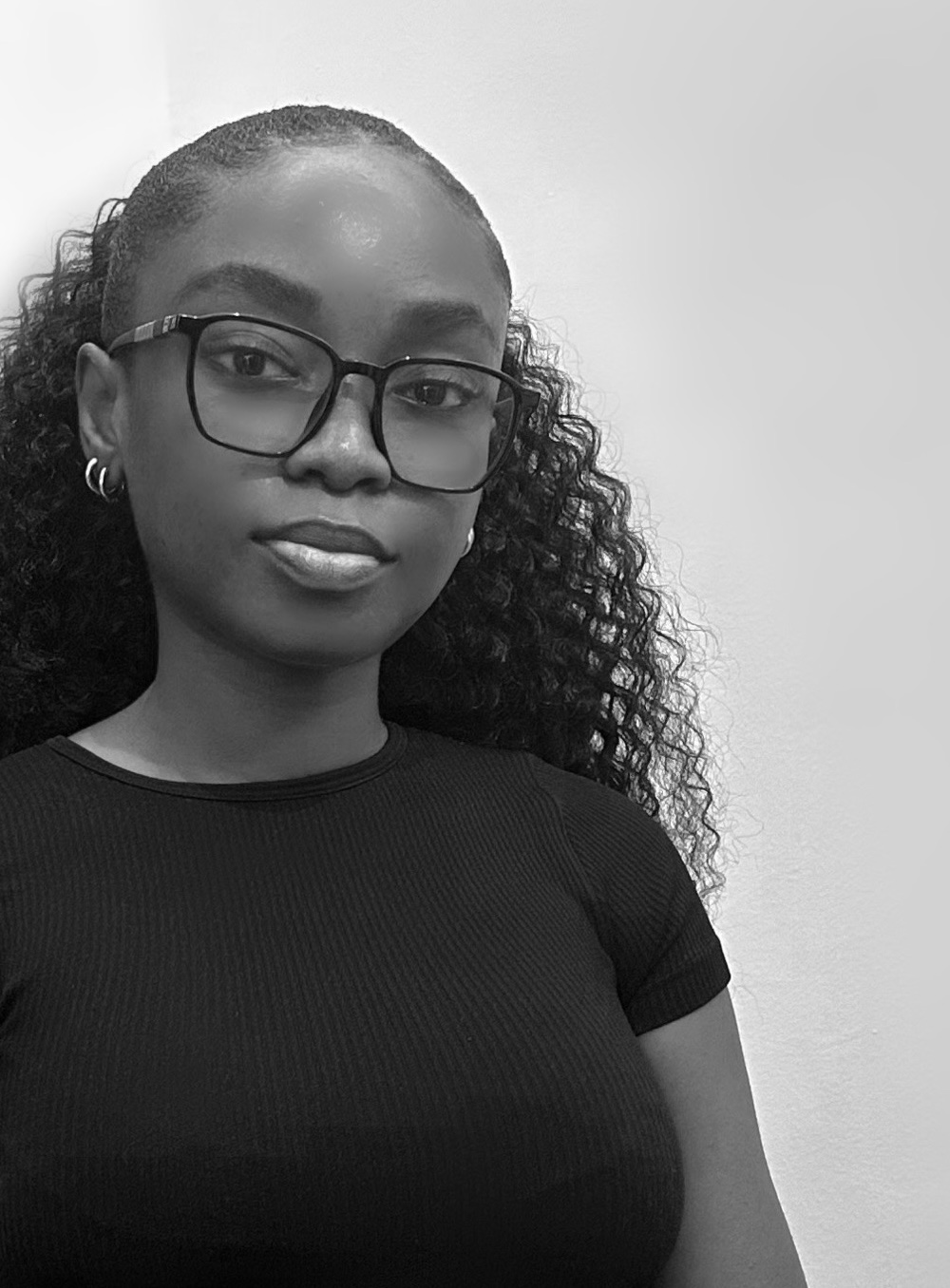
El-ham Tabsoba is a Ghanaian visual artist
Statement / Bio
El-ham Tabsoba (b. 1998, Ghana) is a Ghanaian visual artist based in Accra whose practice explores environmental inheritance and the relationship between people, place and the systems that shape human experience. Working primarily through figurative oil painting, she creates works that move between painting, relief and material assemblage.
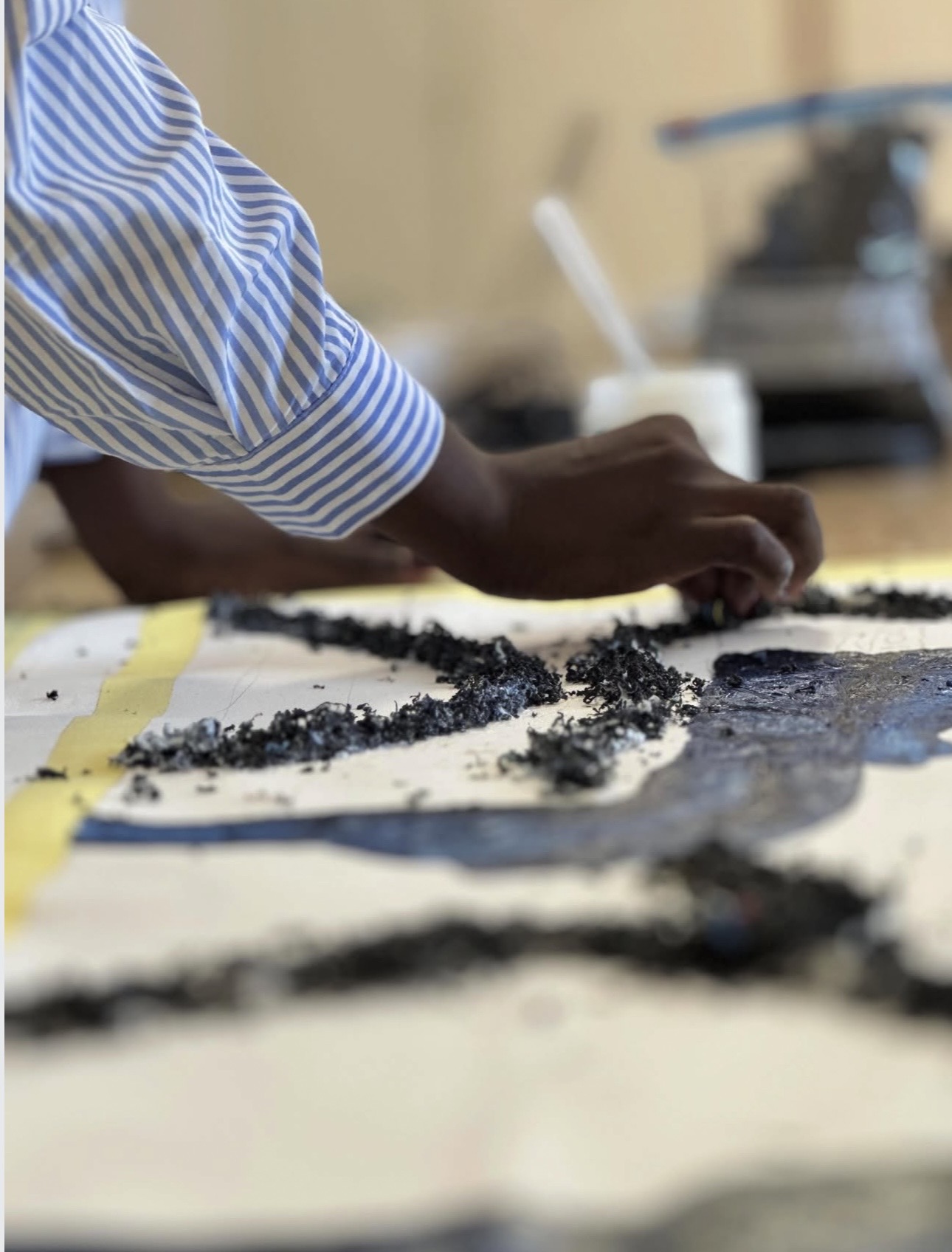
In selected works, El-ham incorporates discarded plastic collected from waste streams in Ghana, which is shredded and embedded directly into the painted surface. The material carries traces of use, movement, consumption and disposal, becoming a physical record of what remains after its original purpose has ended. Its endurance allows her to consider how materials and environmental conditions persist across generations.
Her recent work focuses increasingly on children and younger figures as symbols of inheritance. They represent generations living within conditions they did not create, while also pointing toward futures shaped by decisions made before them. By placing discarded material onto or around their bodies, El-ham connects those who will inherit the future with the material realities being passed on to them. This allows the work to consider inheritance not only as an environmental issue, but also as a question of responsibility, consequence and the relationship between present actions and future lives.
Inheritance within El-ham's work is not limited to what will be left for future generations. It operates as an ongoing system: the present generation is already living within environmental and social conditions shaped by those who came before, while simultaneously contributing to what others will inherit.
Her figures are often painted in blue. The neutrality of the colour creates some distance from immediate racial categorisation, allowing emotion, presence and shared human experience to come forward, while the work remains rooted in her perspective as a Ghanaian artist.
Through the relationship between oil paint, discarded material and the human figure, El-ham examines responsibility, consequence and material history, considering how the traces left by one generation become part of the conditions lived by another.
Process
Plastics collected from local waste streams are sorted, shredded and integrated into painted surfaces. These materials carry traces of human activity while introducing physical layers that reflect memory, movement and transformation. Worked into the oil paint by hand, the fragments alter the surface and allow discarded material to become part of the image rather than remain separate from it.